I was very pleased to talk about the Tifinagh script in the 7th International Conference of Typography in Valencia. This time the focus was in its cultural, social and political aspects. The standardization of the Amazigh language implied the choice of a script to write it. The election of the Tifinagh rather than the Arabic and the Latin was a controversial issue which, to some extent, remains nowadays. It illustrates visibly the political implications of a writing system in multilingual/multicultural environments. Other issues like the need to adapt an ancient alphabet to the new technologies, but above all, to the needs of a mostly Tifinagh-illiterate population in order to facilitate the learning and the use of the script in common life raised interesting questions that I tried to describe.
I want to thank the organisers of the 7CIT for allowing me to participate, and to all the people who worked hard to make this possible. Thank you very much.
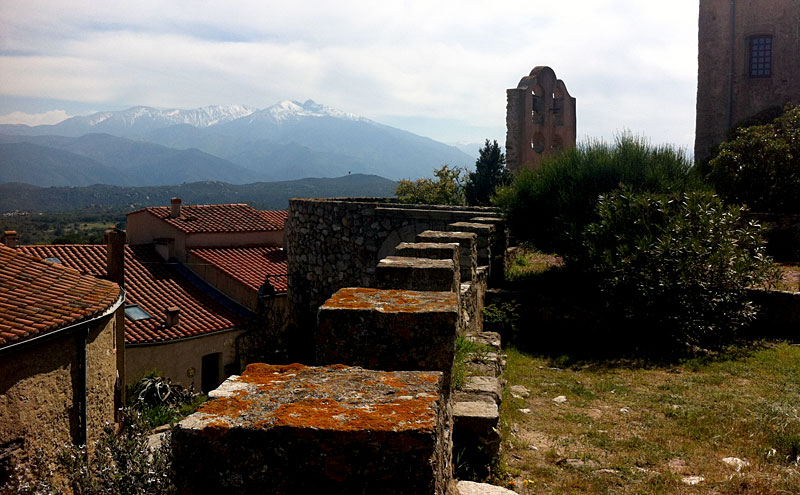
Montalba-le-Château welcomed us with a warm and sunny weather. The castle looked like the right place to isolate ourselves from any distraction and to focus in our porjects. This has been probably the most intense and productive of our workshops. Four days of hard work resulted in the consolidation of the three projects, which was the main goal of this meeting. There is still a lot of work ahead but the main guidelines of our projects are already set. Qandus, Tubqal and Al-Zahra, the three type families, have completely different approaches and are devised for different purposes. Qandus is a display font based in the work of the Moroccan calligrapher Al-Qandusi. Tubqal is a rational sans for long texts based on the mabsut variant of the Maghribi style of calligraphy. Al-Zahra is the most experimental and will play with the horizontal vs. vertical stress angles that make Latin and Arabic calligraphy so different.
Montalba said goodbye in a smoggy, opaque and mysterious atmosphere. What these three diverse projects will look like in our next workshop in Amsterdam remains also a mystery. We will have to wait to reveal it.
Exquisite arabic calligraphy in the Alhambra. Just a tiny sample of the wonders one can find there.
I think it is high time I updated the information about this wonderful and inspiring typographic experience. Since our first workshop in Marrakech last September, we have met two more times in Granada/Córdoba –in December— and recently in Montalba-le-Château, France. Our work in Granada and Cordoba was still rather exploratory. The main guidelines seemed to be defined but there was still the challenge of translating the findings and proposals of each alphabet into the the others while keeping each one’s specificity.
During this second workshop we spent a whole day visiting La Alhambra. With the help of renown professor of Islamic art José Miguel Puerta Vílchez we were absolutely delighted to discover the stunning omnipresence and integration of calligraphy and lettering in the architecture: words were everywhere building texts, textures and walls! Three more remarkable visits completed our field work: the spectacular Mosque of Cordoba, the archaeological site of Madinat al-Zahra and the Cordoba Archeological Museum.
Coexistence? Superposition? Imposition? This is when you realize things were far from ideal in Cordoba at a time.
Al-andalus was clearly a must in this project. Its historical cultural mix of Arab Maghribi, Morisco and Spanish cultures inspired and influenced our work in different ways. It was also an opportunity to think about the ideal of cultural coexistence. The palace of Charles V built inside the Alhambra, or the cathedral erected in the middle of the mosque in Cordoba did not seem the best examples of respectful coexistence and harmony. Food for thought for our projects…
The workshop ended with the presentation of the projects in Casa Árabe. My sincere gratitude to its stuff for their kind support. More about our third workshop in the next post (coming soon hopefully).
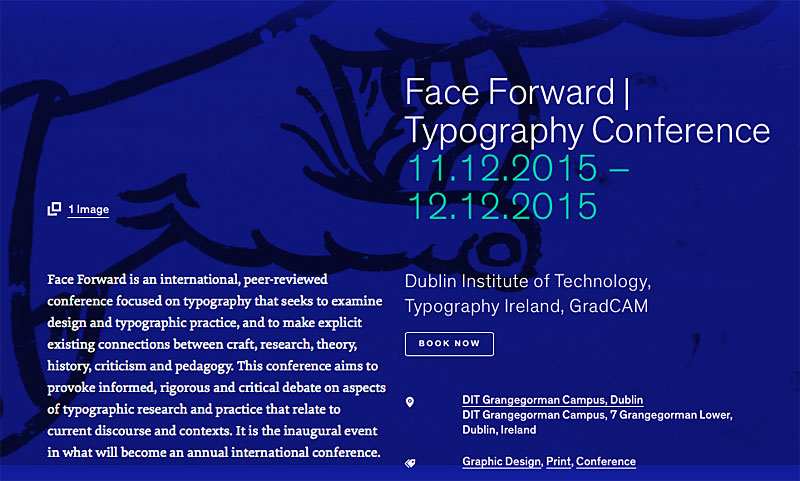
It seems that the end of this year is going to be intense. I am really glad to announce my talk about the Tifinagh script in the Face Forward conference in Dublin. I’ll talk about the normalisation and unification of the Amazigh language, as well as the renaissance and standardisation of its original script, the Tifinagh alphabet, in Morocco, where it coexists with the Arabic and the Latin scripts.
The practice of typeface design in this peculiar context raises extremely interesting and uncommon questions, namely: Which are the criteria to define a unified and manageable character set from more than 20 dialects each one with diverse peculiarities and uses? How to translate the shapes of ancient carved letters into digital media? How to encourage the adoption of an unfamiliar writing system in a context of competition with the Arabic and the Latin script? Would the design of a cursive and more easily writable alphabet facilitate its use at schools? Would a bicameral script help readability in long texts? If so, is Tifinagh an uppercase or a lowercase alphabet? Which would be the right approach to devise a bicameral writing system from a monocameral script that has no calligraphic tradition? I will show a glimpse of the history and development of the Tifinagh alphabet as the answers to these questions are analised.
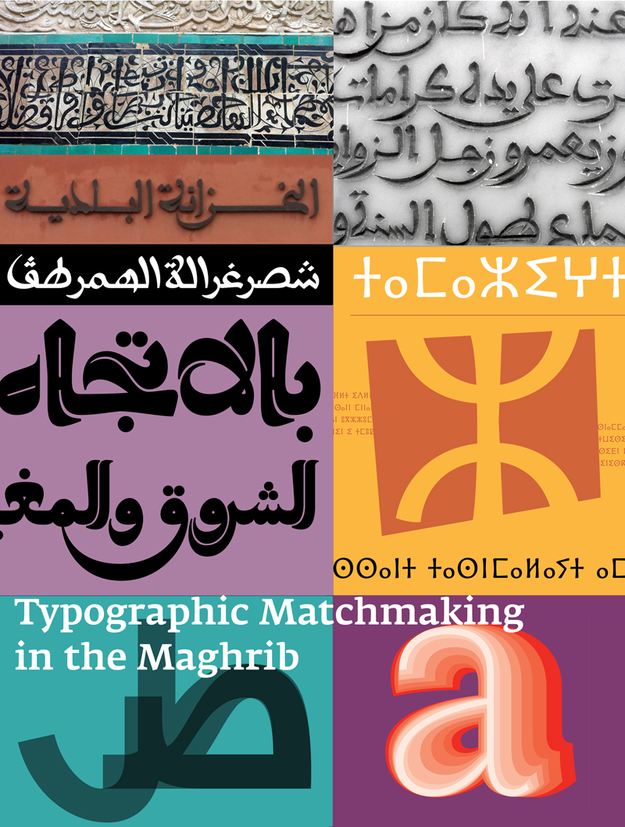
Poster of the TMM3 project displaying Amaikha Tifinagh, among other typefaces.
I am glad to start the News section with this project. During one year a group of European (Dutch, Spanish, French) and Arab (Lebanese, Moroccan, Tunisian) designers will research and develop tri-script font families that combine Arabic, Tifinagh and Latin scripts harmoniously. Both the Maghribi and the Tifinagh scripts have not been fully explored in contemporary digital fonts, though they harbor a wealth of aesthetic variety and expressive potential.
I am really honoured to work with such talented type designers as Laura Meseguer, Kristyan Sarkis, Naïma Ben Ayed, Redouan Chetuan, Salah Bellizi and Andreu Balius. The first workshop took place in Marrakech, from 12th to 19th September 2015. Following three busy days of introductions, presentations, meetings with experts and calligraphers, visits to the IRCAM (Institute Royale de la Culture Amazigh) and the manuscript collection of the National Library of Morocco and, of course, fieldwork and research in the medina and the souk, we had two intense working sessions at the École Supérieure des Arts Visuels de Marrakech (ESAVM).
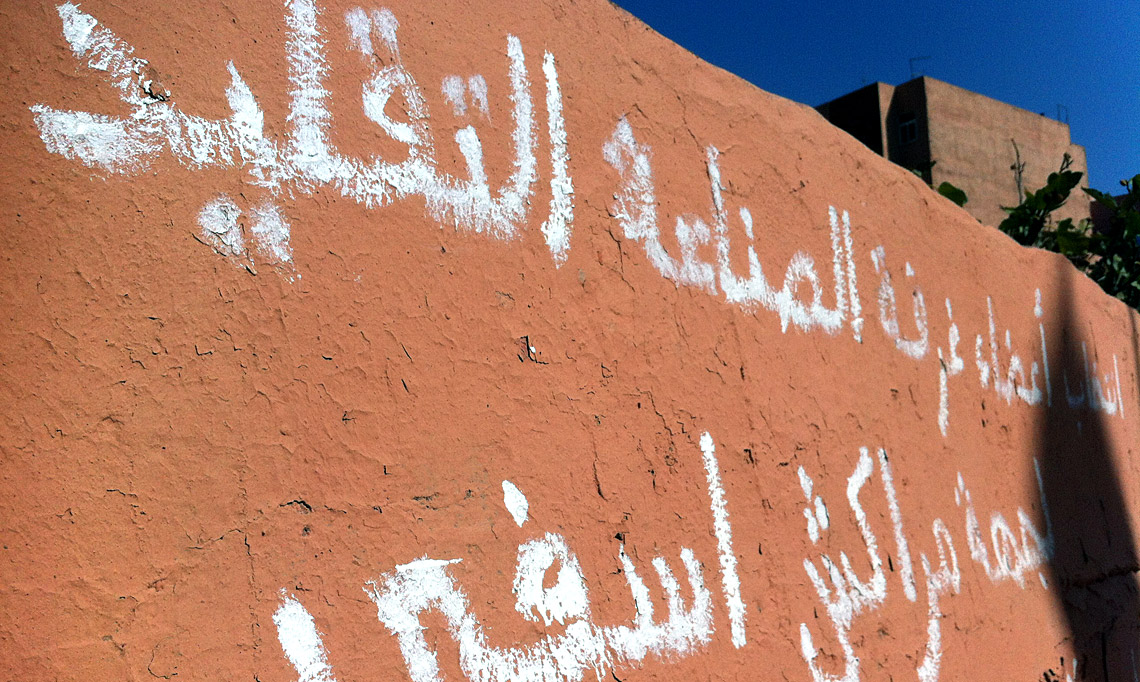
Arabic handwriting on wall in our way to the Majorelle Garden and the Berber Museum
The three teams defined their initial ideas and sketches for the tri-script families. They are diverse in conception but equally interesting and challenging. We will see how they evolve in the next months and how the Tifinagh script, for which I am an advisor in two of the teams, matches the Latin script and the peculiar Maghribi style. Next stage will take place in November in Granada and Córdoba (Spain). I want to thank the Khatt Foundation for giving me the opportunity to work in this project.
See also:
Typographic Matchmaking in the Maghrib (Marrakech)
We use cookies to improve your experience and to analyze site usage. You can accept or manage your preferences. Refusing cookies may affect some features.
Functional
Always active
The technical storage or access is strictly necessary for the legitimate purpose of enabling the use of a specific service explicitly requested by the subscriber or user, or for the sole purpose of carrying out the transmission of a communication over an electronic communications network.
Preferences
The technical storage or access is necessary for the legitimate purpose of storing preferences that are not requested by the subscriber or user.
Statistics
The technical storage or access that is used exclusively for statistical purposes.The technical storage or access that is used exclusively for anonymous statistical purposes. Without a subpoena, voluntary compliance on the part of your Internet Service Provider, or additional records from a third party, information stored or retrieved for this purpose alone cannot usually be used to identify you.
Marketing
The technical storage or access is required to create user profiles to send advertising, or to track the user on a website or across several websites for similar marketing purposes.